Business Health Check™ for owners, boards and executive teams.
A structured diagnostic to identify hidden risks, inefficiencies, control weaknesses and growth barriers before they become expensive business problems.
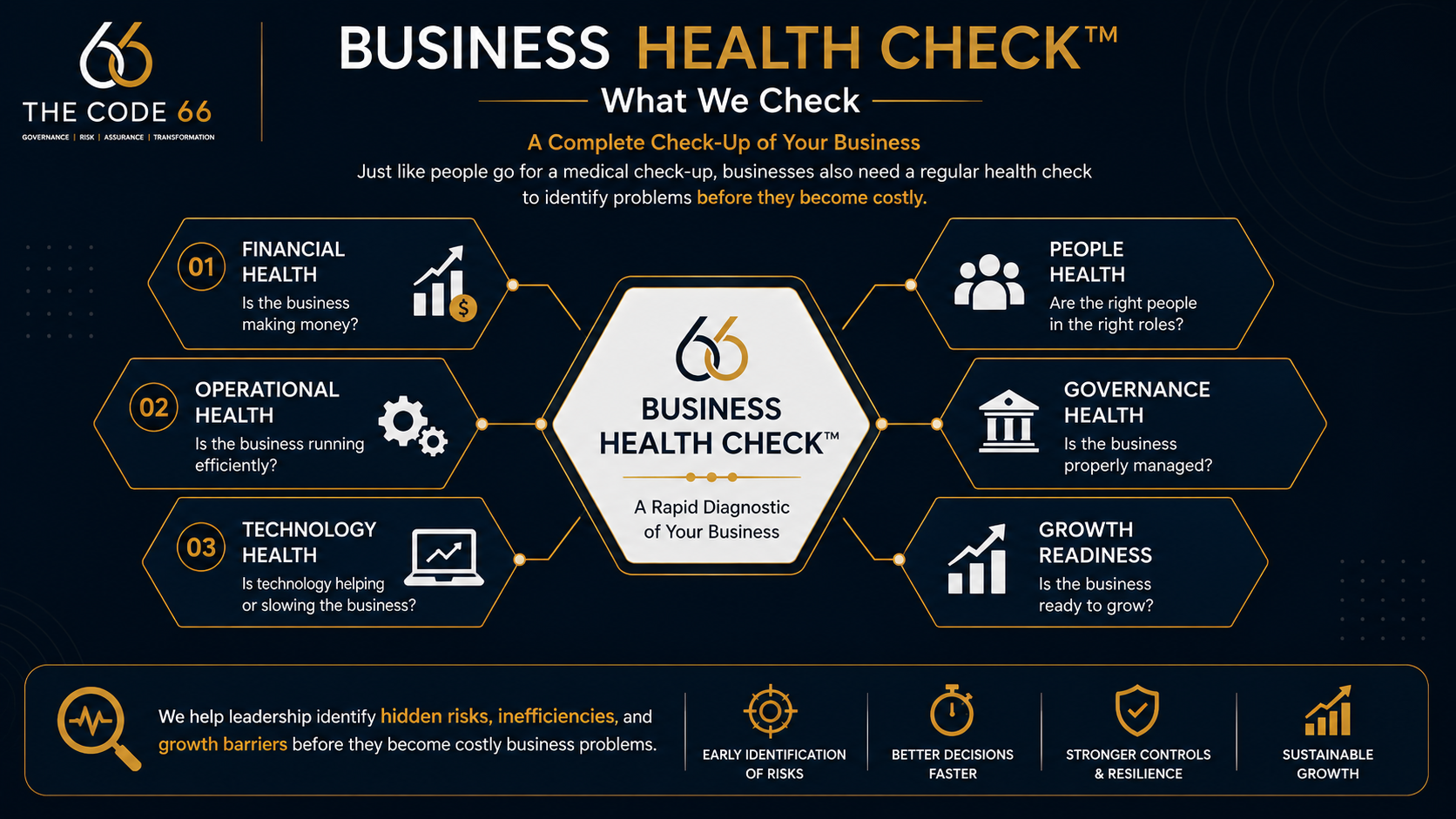
Is your business growing, or only getting bigger?
Many businesses expand in revenue, teams and operations, but silently accumulate weak controls, unclear accountability, inefficient processes, financial leakage and technology gaps.
Business Health Check™ helps leadership teams see the real condition of the business with clarity before small weaknesses become structural problems.
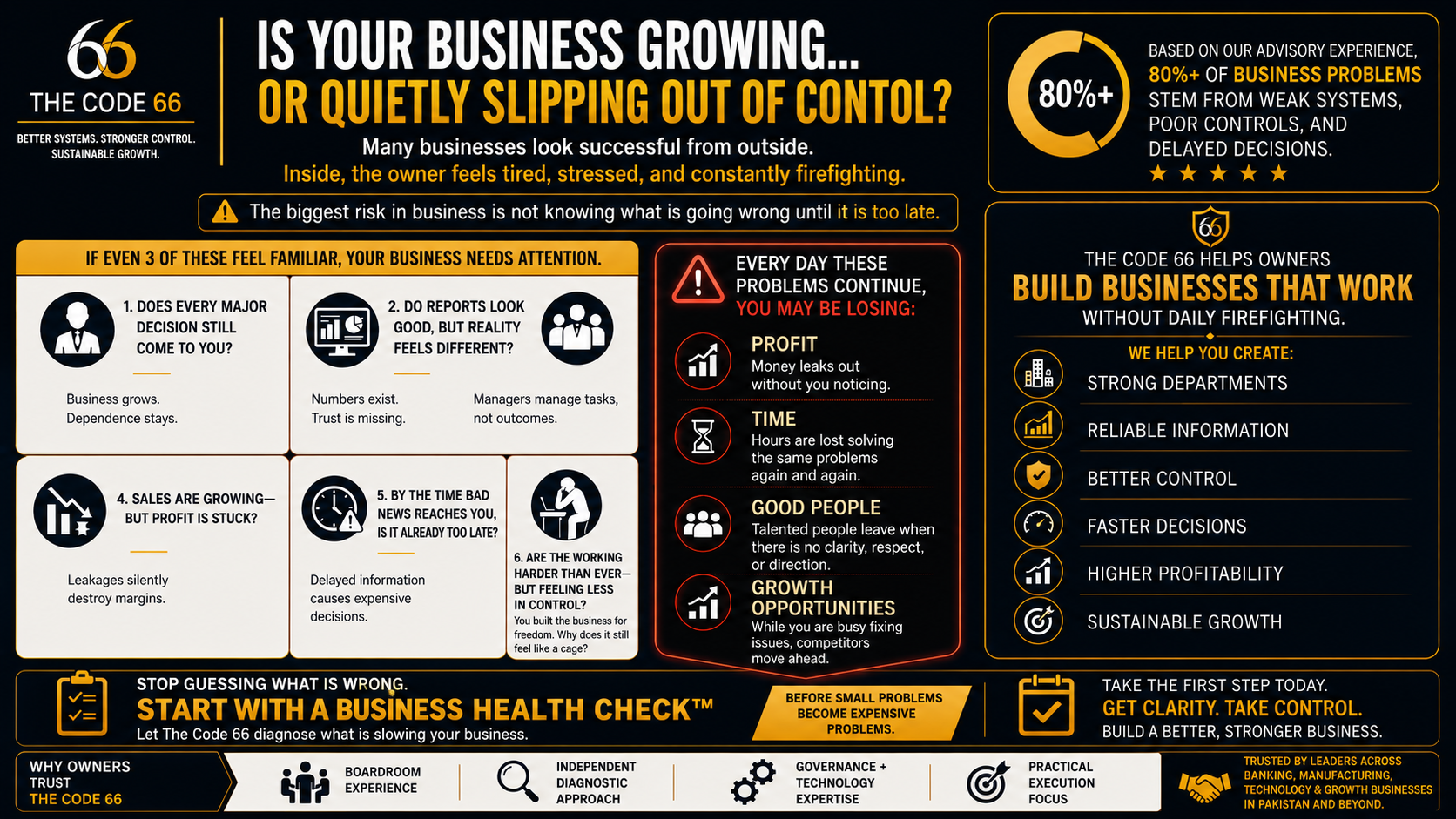
Six areas that reveal the real health of your business.
Our diagnostic approach reviews the key dimensions that determine whether your business is resilient, controlled, scalable and ready for growth.
Financial Health
Cash flow, profitability, reporting quality, financial controls and decision visibility.
Operational Health
Process efficiency, workflow discipline, productivity and execution bottlenecks.
Technology Health
Systems, automation, ERP readiness, data quality and digital enablement.
People Health
Roles, accountability, leadership capacity, reporting lines and performance culture.
Governance Health
Policies, authorities, controls, oversight mechanisms and compliance discipline.
Growth Readiness
Scalability, risk exposure, operating maturity and transformation priorities.
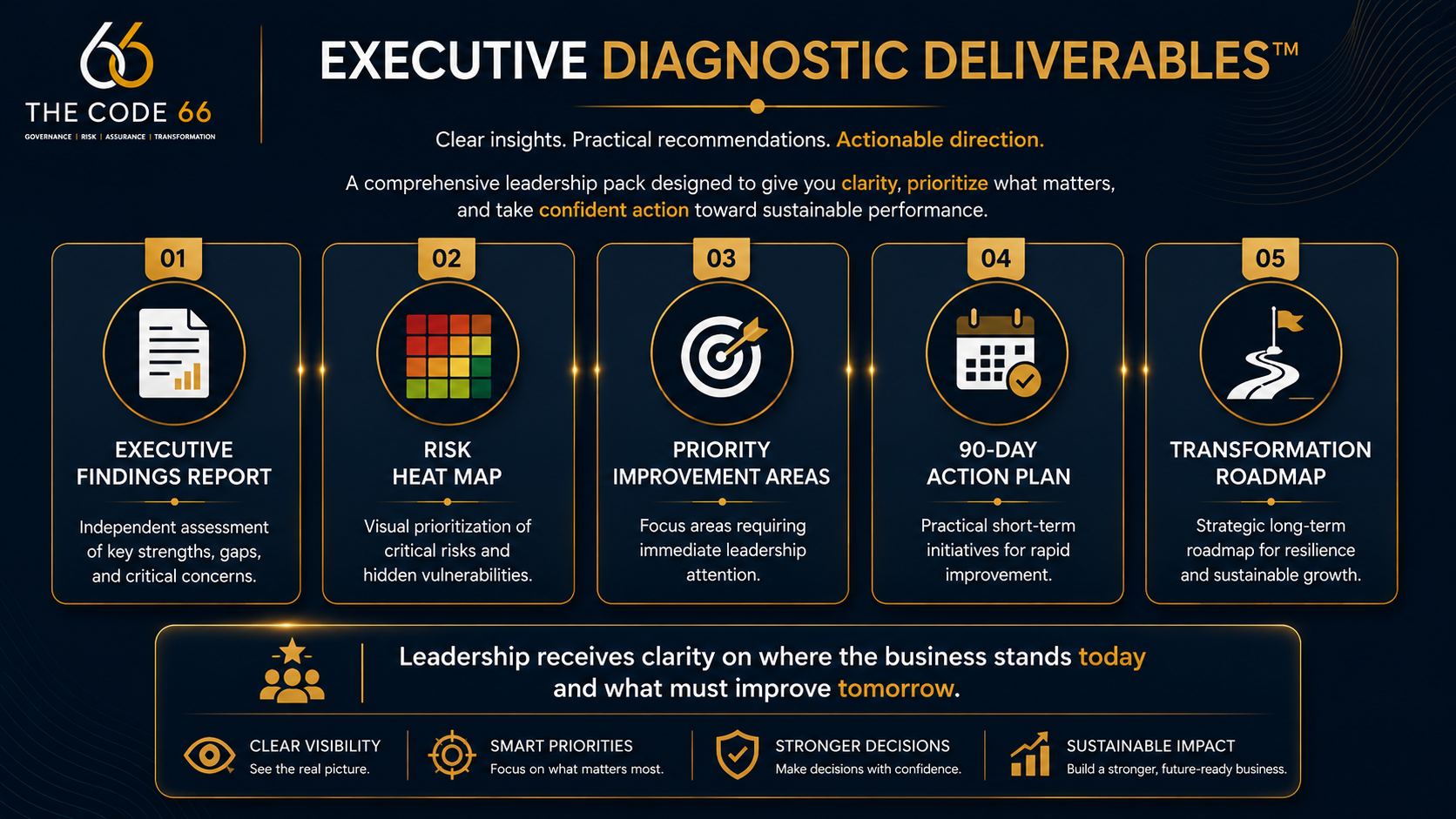
Executive diagnostic deliverables.
The outcome is not a generic report. It is a practical executive diagnostic that identifies priority risks, gaps and action areas.
Risk Indicators
Clear view of business vulnerabilities and priority risks.
Improvement Priorities
Management-ready actions by urgency and impact.
Executive Summary
Board/CXO-level insights presented in clear language.
Action Roadmap
Practical transformation and control improvement direction.
A focused diagnostic approach.
Designed for owners and executive teams who need quick clarity without disrupting the business.
Discovery
Understand business context, pain points, leadership concerns and current growth challenges.
Review
Review documents, systems, reports, controls, workflows and operating practices.
Diagnosis
Identify risks, inefficiencies, control gaps and hidden business weaknesses.
Action Plan
Present executive findings, priorities and a practical improvement roadmap.
Ideal for Growing Businesses
Especially useful where growth has outpaced systems, governance or internal controls.
Useful for Owners & Boards
Gives decision-makers a clear view of what needs attention before investment or expansion.
Practical, Not Academic
Focused on real business action, not theoretical consulting language.
Ready to understand the real health of your business?
Schedule a confidential Business Health Check™ discussion with The Code 66 advisory team.